CNC Plasma Cutter
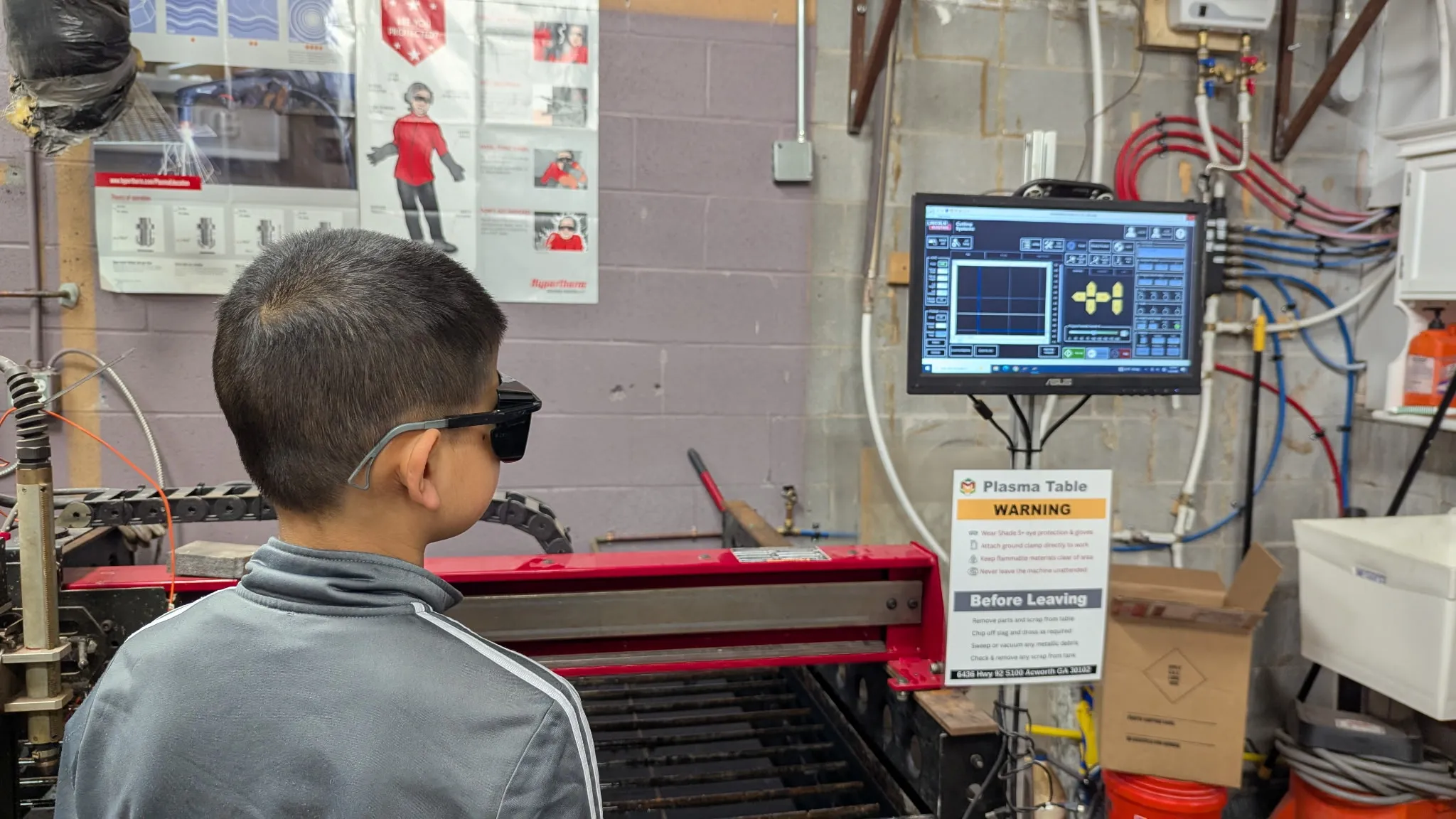
CNC plasma cutting is the fastest way to cut through steel and aluminum plate. By directing a focused jet of ionized gas at 30,000°F, the machine melts and blows material away along a programmed path, producing structural metal parts in minutes.
About the Machine
A plasma cutter works by passing electrical current through a compressed gas (air or nitrogen) to create plasma: a superheated ionized gas that conducts electricity. This plasma jet melts the metal and high-pressure gas blows the molten metal out of the cut, leaving a narrow kerf.
Our CNC plasma table uses torch height control (THC) to automatically maintain the optimal cutting height as the torch follows the programmed path, critical for consistent cut quality on warped or uneven plate. Students learn to understand and interpret THC feedback as part of the setup process.
Plasma cutting leaves a heat-affected zone (HAZ), a narrow band along the cut edge where metal properties change due to rapid heating and cooling. Students learn to account for this in their designs and post-process parts appropriately.
Specifications
- Process CNC Plasma (ionized gas arc cutting)
- Primary Materials Mild steel, stainless steel, aluminum
- Typical Material Thickness Up to ½ in steel, up to ¼ in aluminum
- Cut Quality ±0.030–0.060 in typical tolerance
- Control CNC table with THC (torch height control)
What Students Learn
- Plasma physics basics: how ionized gas conducts electricity to cut metal
- DXF file preparation: clean geometry for reliable cutting
- Nesting: efficient use of metal plate
- Torch height control (THC) and its role in cut quality
- Kerf width and compensation for tight-fitting parts
- Dross removal and post-cut grinding/filing
- Heat-affected zone (HAZ) and its effect on part strength
- Metal safety: fumes, UV radiation, spatter, and fire hazards
Robotics Applications
- → Steel gussets and brackets for FRC-scale robot frames
- → Aluminum mounting plates cut quickly from thick stock
- → Custom structural members with through-holes and pockets
- → Decorative team plates and field element components
- → Rapid iteration on metal part geometry before final routing
Want to Use This Equipment?
Join FutureForward and get hands-on access to our full fabrication shop from day one.
Apply Now